Pair work-based learning with short, reusable FlexLessons — a little preparation beforehand and a little reflection afterward — to turn a one-time workplace visit into a connected learning experience.
A practical guide for educators and WBL coordinators.
Imagine this scenario. Two students attend the same job shadow at a local engineering firm.
Student A arrives with little context, observes for a few hours, and leaves thinking engineering seems interesting. Student B arrives after completing a short FlexLesson: before the visit she reviewed a few basic concepts, watched a short video about the field, and wrote down questions she wanted to ask. During the shadow she notices specific things and asks thoughtful questions. When she returns to school, she completes a reflection that helps her think about what she learned and whether engineering might be a good fit.
Both students had the same opportunity. The difference was the preparation beforehand and the reflection afterward — and that small amount of structure can turn a simple workplace visit into a much more meaningful learning experience. One of the easiest ways to create that structure is by pairing work-based learning experiences with simple FlexLessons.
The challenge: why WBL experiences sometimes fall short
Anyone coordinating work-based learning knows how much effort it takes to make these opportunities happen — building employer relationships, coordinating schedules, managing permissions, and arranging logistics. But even when everything runs smoothly, the learning outcomes can vary widely. Some students return energized and reflective; others struggle to explain what they observed or how it connects to their goals. Without structure, the experience can remain an interesting event rather than a meaningful learning moment.
Students entering a workplace for the first time often spend much of their energy simply trying to understand what is happening around them — unfamiliar terminology, different roles, and not knowing what to ask. Reflection presents a similar challenge: if students immediately move on to the next assignment, the details fade quickly. A little preparation beforehand and a little reflection afterward make a big difference.
Using FlexLessons to support work-based learning
Custom FlexLessons provide a simple way to add that structure. A short lesson before an experience prepares students for what they’re about to see; a short lesson afterward gives them time to process what they observed and connect it to their interests and goals. These lessons don’t need to be long — fifteen to twenty minutes is often enough.
Once you create a FlexLesson, it can be reused whenever a similar experience occurs. A preparation lesson for healthcare job shadows can be assigned every time students visit a hospital; a reflection lesson on professional communication can work after almost any workplace visit. Over time, these become a small library that supports your entire program. Many educators also fold in Pathful resources — recorded WBL Sessions, Industry-Led Projects, or Virtual Job Shadow videos — to introduce a field beforehand or extend learning afterward.
Pre-session FlexLessons: helping students arrive prepared
Pre-session FlexLessons give students a quick orientation before they step into a professional environment. When students arrive prepared, they notice more and participate more actively — they understand basic terminology, recognize tasks and workflows, and feel more comfortable interacting with professionals.
For example, students preparing for a marketing job shadow might watch a short video about a typical day, review terms like “target audience” or “campaign metrics,” and write down three questions to ask. That takes about fifteen minutes, but it turns passive observers into active learners. Some programs even request a Live WBL Session ahead of a site visit so students can build context first.
What this looks like in practice
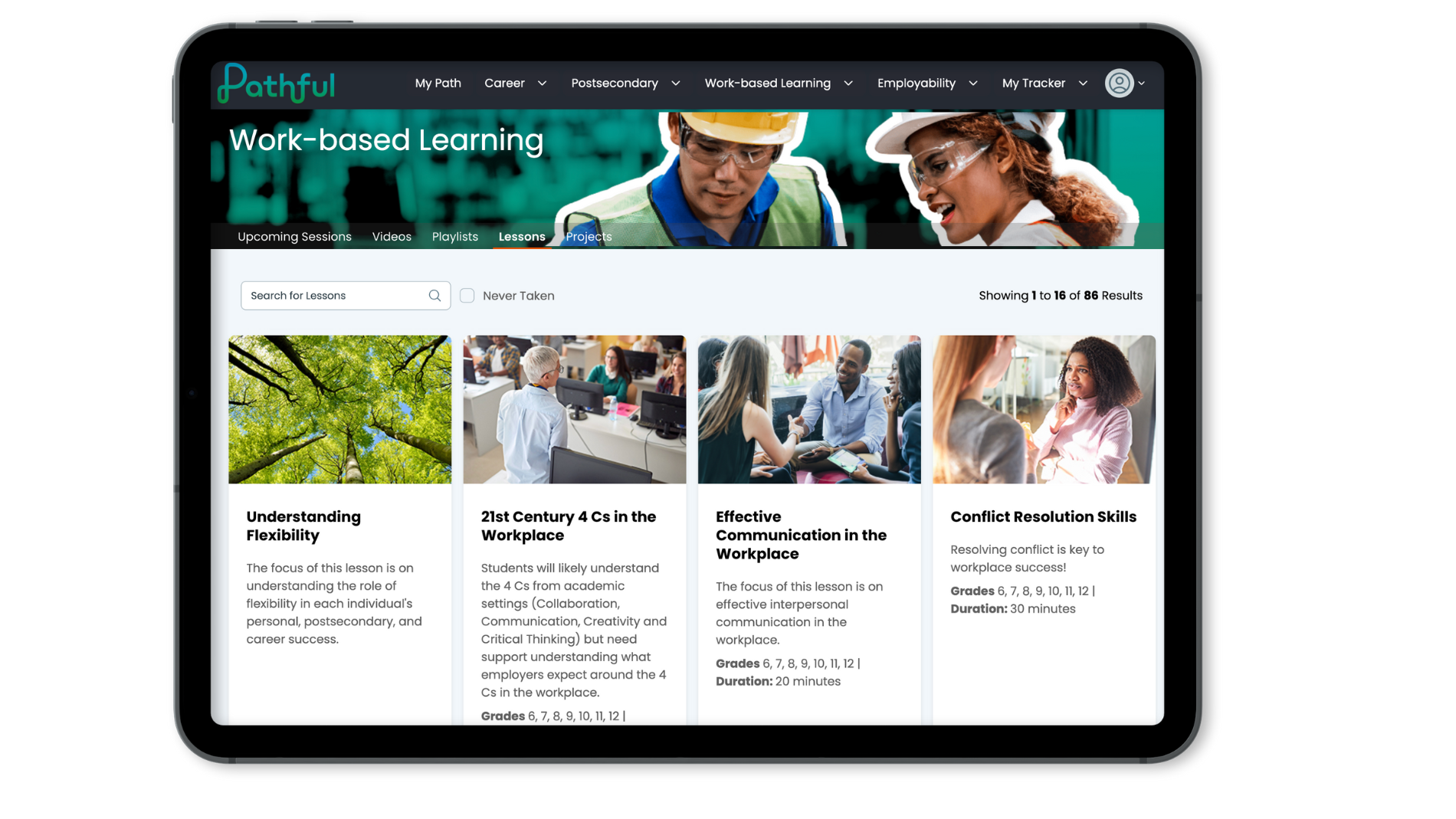
One program preparing students for a hospital shadow created a short FlexLesson called Preparing for Your Healthcare Career Exploration. Students watch a short video showing a nurse moving through a typical shift, review how healthcare teams work together, and end by writing three questions they want to ask. When they arrive, they already have context — and mentors notice the difference right away, as students ask questions that show they were thinking before they walked in the door.
Implementation tip: assign pre-session FlexLessons three to five days before the experience. Most effective lessons take about 15 to 25 minutes — enough context without feeling like another major assignment.
Post-session FlexLessons: turning experiences into insight
While preparation improves the experience itself, reflection helps students make sense of what they saw. After a visit, students often return excited but unsure how to process everything — and without structured reflection, those impressions fade.
Reflection often starts with simple questions: What surprised you? What skills did you see professionals using? What part of the work seemed most interesting? From there, students connect the experience to their own interests and goals — did the career match expectations, what skills seemed most important, is this worth exploring further? Some lessons add a small action step, like writing a professional thank-you message or researching a related pathway.
Example: after an engineering site visit
After visiting an engineering firm, one group completed a reflection FlexLesson the next day. Students described a problem-solving moment they observed (many wrote about engineers collaborating to troubleshoot design challenges), chose one role they noticed and researched the education and training it requires, and ended with a thank-you email and a personal goal tied to a skill they observed. What might have been remembered as a simple field trip became a clearer understanding of how engineering work actually happens.
Start small and build your FlexLesson library
The easiest way to begin is to start small — and if you need support, reach out to your Customer Success Manager for help. Instead of designing lessons for every possible experience, begin with two: one general preparation lesson and one general reflection lesson.
A preparation lesson might include a short video about workplace expectations, a quick research prompt about the company, and an activity where students write questions. A reflection lesson might ask students to describe what they learned, identify professional skills they observed, and explain how the experience connects to their interests. Within a semester, many programs find they have four to six reusable lessons that support most of their work-based learning activities. Creating a lesson might take an hour, but assigning it later takes seconds. (If you plan to incorporate Live WBL Sessions, request them about two weeks in advance so there’s time to coordinate with professionals.)
A small change that strengthens every experience
Work-based learning gives students a chance to see real careers up close — but the learning doesn’t happen automatically. A short FlexLesson before and after a visit provides just enough structure to help students arrive prepared, notice what matters, and reflect on what it means for their future. Start with your next opportunity: create one preparation lesson and one reflection lesson, assign them before and after the visit, and see how students respond.
Three simple FlexLesson ideas to try first
- Workplace preparation — before a job shadow or site visit, students watch a short career video or recorded Live WBL Session, research the organization they’ll visit, and write three questions they want to ask.
- Observation and skills reflection — after a visit, students identify two or three professional skills they observed and describe how those skills appeared in the work environment.
- Career path exploration — students choose one role they observed and research the education, training, and career pathways connected to that position.
Was this article helpful?
Thanks for letting us know!

Keep exploring.
Can't find what you need?
Our support team is here to help you make the most of Pathful.