
Career exploration sounds like a middle school concern. The research says otherwise, and elementary teachers are already doing the work — they're just not calling it that yet.
Career exploration sounds like a middle school concern, and the instinct to treat it that way is understandable. But by the time most students get there, they've already started narrowing. They know what "kids like them" do. They've absorbed assumptions about what's "realistic." Research shows that children as young as six begin endorsing stereotypes about which careers are meant for people like them, and that those early assumptions shape the choices they make years later. The window for genuinely open curiosity is earlier than most career programs acknowledge, and it's harder to reopen once it closes.
Elementary teachers are natural career educators. Your students already ask why things work the way they do and what the adults in their lives actually do all day. That's exactly what Pathful Junior is built for.
Career exploration at this age isn't what most people picture
It doesn't mean job training. It doesn't mean asking a seven-year-old to pick a career path. It means helping students notice the working world around them: what people do, how those things connect, what kinds of work feel surprising or interesting. Most elementary educators are already doing this. They're just not calling it career exploration.
Career development theory has a name for this period. Donald Super called it the growth stage: childhood through early adolescence, when self-concept forms and attitudes about work take root. What students encounter during this window directly shapes what they believe is achievable.
What changes with a platform behind it is range. Students encounter careers they'd never find on their own, from communities and industries far outside their immediate experience. A student who has only ever seen a small slice of what adults do for work starts to see a much wider picture. That picture is the foundation everything else builds on. The broader it is in elementary school, the more a student has to draw from when interests solidify, choices narrow, and real decisions start to matter.
Pathful Junior is built for every stage of elementary
The platform differentiates by design. Lessons are specifically marked for K–1, 2–3, and 4–5, so the content students encounter is calibrated for where they actually are developmentally.
- Career Central gives students access to a broad library of career profiles organized by cluster. For younger students, that might mean pulling up a career video on the projector during morning meeting and opening a discussion. For older students, it's something they can navigate independently with a prompt.
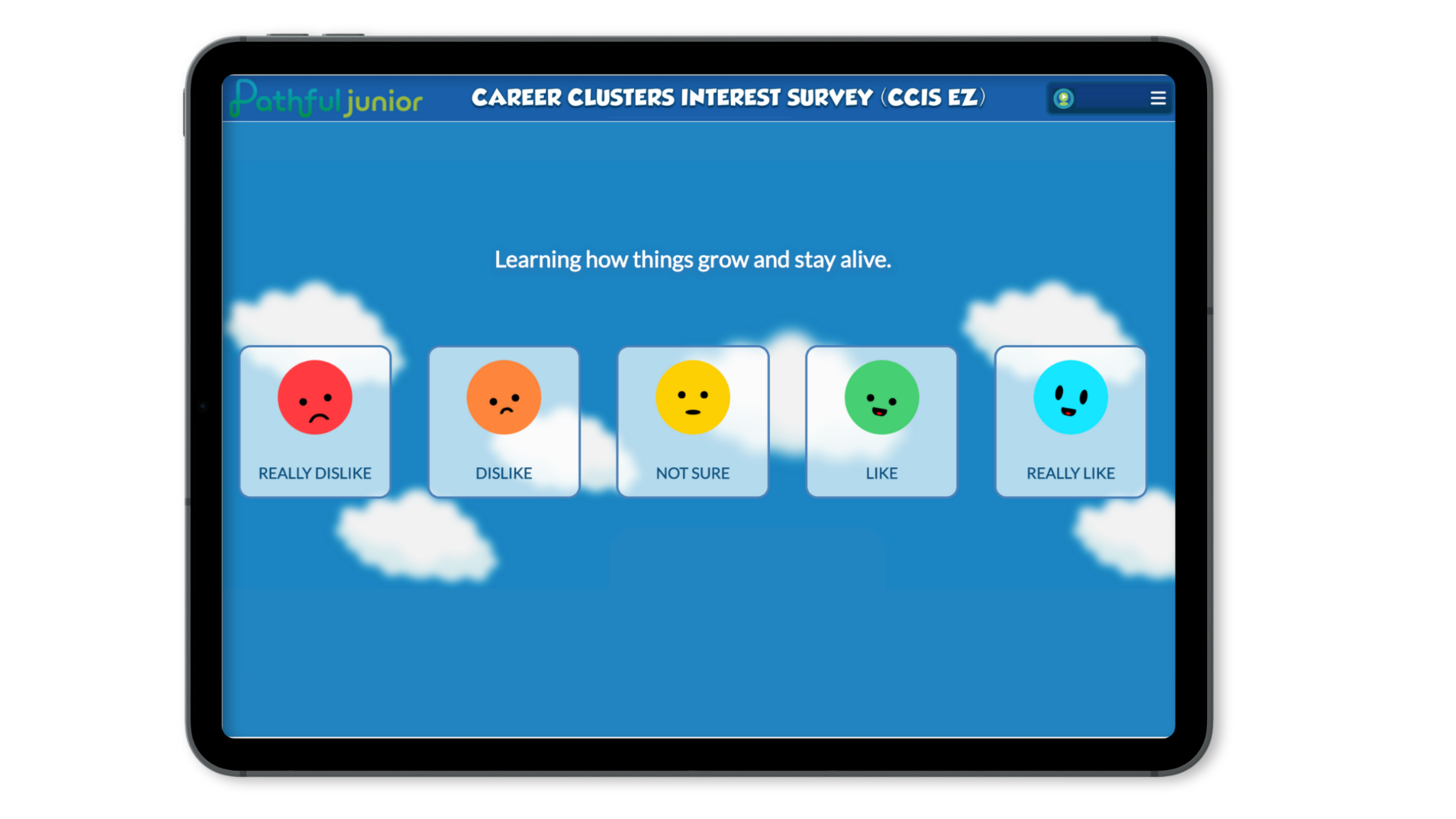
- The Interest Survey uses emoji-based responses and reads prompts aloud, so even kindergartners can participate without reading a single word.
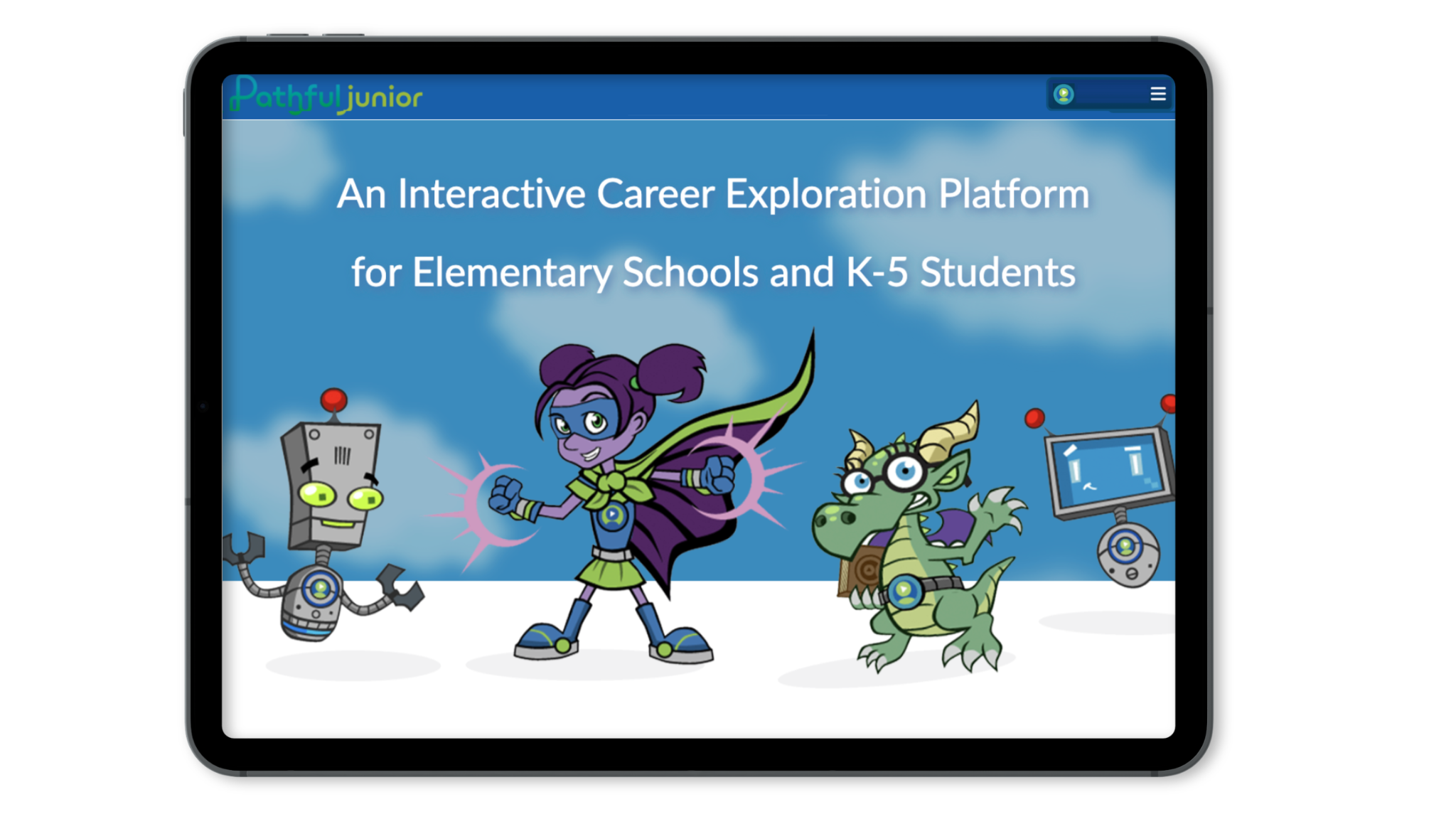
- The Career Crew characters (Zuri, Fact Dragon, Volt, and Beep 9) serve as familiar guides throughout the platform and give younger students something to connect with between sessions.
What keeps the experience appropriate at every grade level isn't a different tool for each age. It's the lesson content itself, designed to stay calibrated to where students actually are from kindergarten through fifth grade.
Starting early changes what comes next
Students who build interest awareness in elementary school arrive at middle school with more self-knowledge and broader exposure. Students who encounter career-related learning early are more motivated and better able to connect what they're studying to the world outside school. They've already practiced the habit of asking "what do people do, and could that be me?" That foundation matters when goal-setting and planning conversations start in earnest.
Starting earlier doesn't mean doing more. It means the work you're already doing has more time to compound. It requires finding the 15 minutes where curiosity already lives (morning meeting, a transition, Friday afternoon) and letting the platform support what's already happening in your room.
A place to start
If you're new to the platform or still figuring out where career exploration fits in your day, start with the Interest Survey. Run it with your class and use the discussion afterward to get a genuine read on what your students are already curious about.
From there, the grade-level lessons do most of the heavy lifting. The career videos and self-led activities are designed for students to move through with minimal instruction. Your role is to get them started, stay present, and follow their curiosity when it surfaces. [Link to the curriculum grid breaking down K–1, 2–3, and 4–5 lessons — article not yet published to Resource Center] shows exactly where to point your students without having to build anything yourself.
When you're ready to build on what the lessons surface, Making the Most of 15 Minutes: Pathful Junior Activities That Fit Any Schedule has a full list of activities you can layer in around them.
Sources
- Master, A., Meltzoff, A. N., & Cheryan, S. (2021). Gender stereotypes about interests start early and cause gender disparities in computer science and engineering. Proceedings of the National Academy of Sciences.
- Education and Employers. (2018). Drawing the Future: Exploring the career aspirations of primary school children from around the world.
- Super, D. E. (1980). A life-span, life-space approach to career development. Journal of Vocational Behavior, 16, 282–298.
- Advance CTE. (2024). Integrating career awareness into elementary school. (citing Yavuz, O., 2022, The Career Development Needs of Elementary School Students)
Was this article helpful?
Thanks for letting us know!

Keep exploring.
Can't find what you need?
Our support team is here to help you make the most of Pathful.