
From Counselor's Office to Career Path: How Career Readiness Platforms Support Undecided Students
"Undecided" has always been one of the most common conditions in the counselor's office. Here is how the tools available to fix it have evolved, and what a truly connected platform now makes possible.
Every August, the back-to-school season triggers the same scenario in counselor's offices across the country: a student sits across from a counselor, schedule form in hand, shrugging at the question of which courses to choose. "Undecided" is not a problem unique to college freshmen. It is, in fact, one of the most common and consequential conditions facing high school students at every grade level.
For decades, school counselors navigated this challenge with a relatively limited set of tools: printed interest inventories, binders of career cluster information, and the occasional career fair. The gap between what a student thought they might want to do and what they actually needed to study was often filled by guesswork, parental pressure, or defaulting to the path of least resistance. The consequences, ranging from disengagement to dropout, were very real.
Today, the landscape looks substantially different. Career Readiness and Development (CRD) platforms have fundamentally changed what counselors can offer undecided students, turning a passive, paperwork-driven advising session into a data-rich, personalized exploration experience. Understanding how we got here, and where the most forward-thinking tools are taking us, matters enormously as districts prepare for the year ahead.
The old playbook: what career advising looked like before technology
For most of the 20th century, career advising in secondary schools was largely reactive. Students who arrived in the counselor's office undecided were given a Holland Code assessment or a similar interest inventory printed on paper. The results pointed toward broad career clusters, and the counselor would pull a binder or direct a student to the school's reference shelf.
The limitations were structural, not personal. Counselors were (and still are) responsible for far more than career advising. A 2024 report from the American School Counselor Association found the national average student-to-counselor ratio remains above 430 to 1, well beyond the recommended 250 to 1. With that caseload, deep, individualized career exploration was simply not scalable.
The tools available compounded the problem. Interest surveys revealed preferences, but they did not connect those preferences to the real world of work in any meaningful way. There was no link between "I scored high in artistic expression" and "here is what a graphic designer's workday actually looks like, here is what the job market pays in your region, and here are the courses you should take as a sophomore to stay on track." The student left the office with a cluster label and very little else.
Work-based learning existed, but it was typically reserved for older students, managed manually, and limited by the counselor's personal network of employer contacts. Equity was a persistent problem: students from families with professional connections could draw on those networks, while first-generation students had no equivalent bridge to the world of work.
The first wave: digital career exploration arrives
The early 2000s brought the first generation of web-based career exploration platforms into schools. Tools like interest inventory software, state-sponsored career information delivery systems, and early college-and-career readiness products began digitalizing what had previously lived in binders. Students could now complete assessments on a computer and receive automatically generated reports pointing toward career clusters and postsecondary options.
This was genuinely useful, but it replicated many of the limitations of the paper era in digital form. The data still existed in silos. A student's assessment results lived in one system, their course plan in another (often the school's student information system, if it existed at all), and any work-based learning documentation in yet another binder or spreadsheet. The counselor still had to synthesize these disparate pieces manually.
College and Career Readiness (CCR) platforms of this era excelled at administrative efficiency. They streamlined college application management, tracked graduation requirements, and helped schools demonstrate compliance with state and federal mandates. What they were not designed to do was deliver the kind of immersive, continuously updated, industry-connected career development experience that research increasingly showed students actually needed.
The data made it clear: knowing what a student was interested in was not the same as preparing that student for a career. The platform category needed to evolve from passive information delivery to active career development.
The shift toward Career Readiness and Development
The distinction between a College and Career Readiness platform and a Career Readiness and Development (CRD) platform is not semantic. It reflects a fundamentally different theory of how students move from uncertainty to direction.
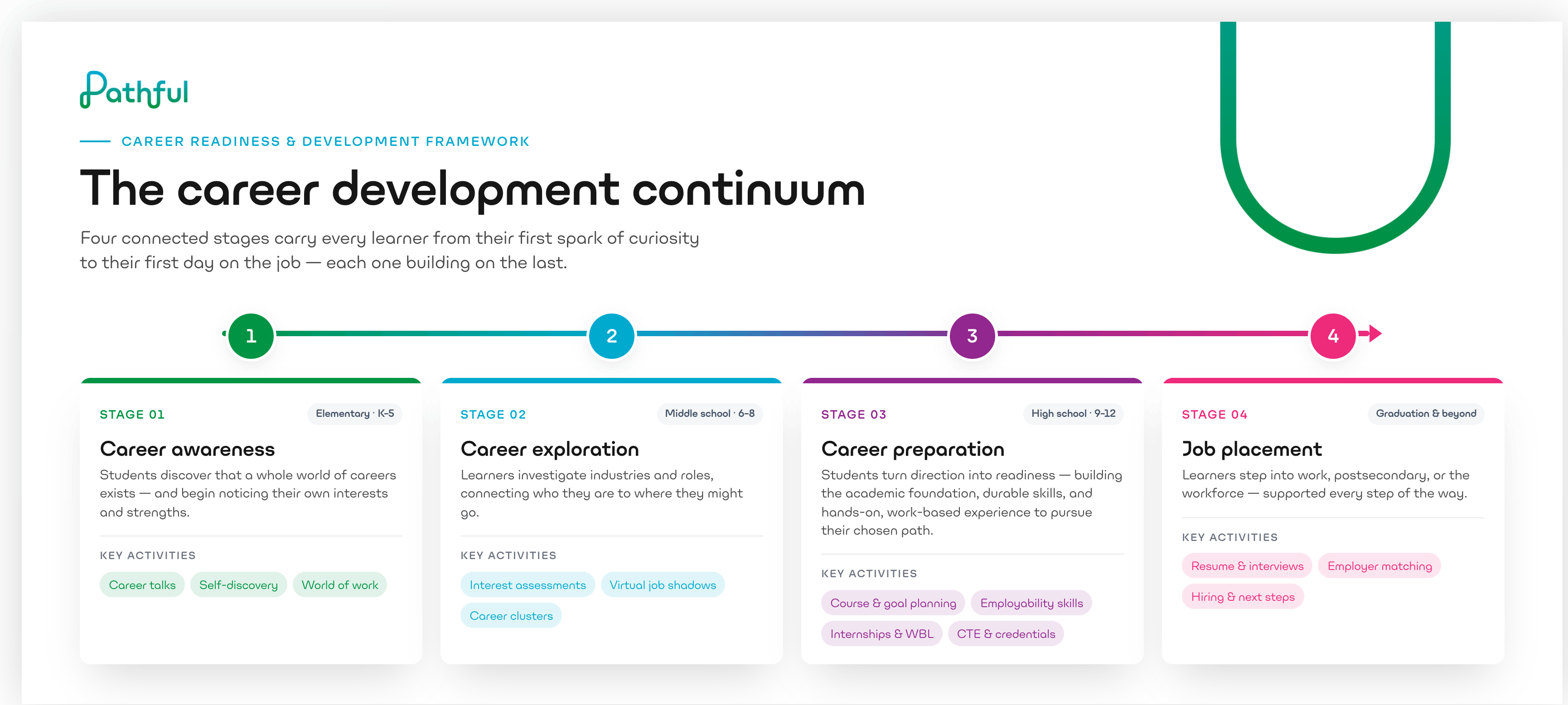
CRD platforms are designed around a progressive career development journey, one that begins as early as elementary school and deepens through exploration, preparation, and real-world connection. Rather than a single moment of assessment, the student's experience is continuous, building career identity gradually through age-appropriate activities, employer-connected content, and authentic skill development. The research behind this approach is compelling: students who experience integrated career development activities show a 23% improvement in career and workforce outcomes, and structured career development interventions can reduce career decision-making difficulties by 50%.
For undecided students specifically, this approach is transformative. Instead of a counselor asking "what do you want to do with your life" and waiting for an answer, the platform creates the conditions for discovery. Virtual job shadowing videos put students inside real workplaces. Informational interview features connect students directly to professionals in fields they are curious about. Industry-led projects let students experience what actual work in a sector feels like before they commit to a pathway.
Pathful, recognized as Career Readiness Platform of the Year by Education Technology Insights in 2025, built its CRD platform around exactly this kind of progressive, immersive experience. Backed by a network of more than 5,000 industry partners, the platform connects students in rural and urban districts alike to authentic career content that their own family networks and zip codes could never provide.
What counselors actually need when working with undecided students
Ask any school counselor what makes advising an undecided student difficult, and the answers converge quickly. The student does not know themselves well enough yet. The student knows their interests but does not understand what careers those interests could lead to. The student has a vague sense of direction but does not understand how the courses they choose this semester connect to the future they want. And the counselor, with hundreds of other students to serve, does not have enough time to manually bridge every gap.
What does effective career advising for undecided students require?
- Self-knowledge tools that surface genuine interests, values, and strengths, not just personality labels
- Real-world exposure to work at a depth that goes beyond career descriptions, including employer connections, job shadows, and informational interviews
- A clear link between course selection and career pathways, so students understand how today's academic choices shape tomorrow's options
- Administrative capacity to track and document each student's progress, ensuring no student falls through the cracks over time
Early platforms addressed one or two of these needs in isolation. The CRD platforms that have emerged over the past several years address all four, and increasingly, they do so in ways that give counselors scalable visibility across their entire caseload, not just the students who walk through the office door.
The role of course planning in the career readiness journey
One of the most persistent disconnects in secondary education is the gap between career exploration and course selection. A student can complete a beautifully designed career exploration experience in October and then sit down with their counselor in January to register for next year's courses with no memory of, or connection to, what they explored. The two activities happen in separate systems, at separate times, with no structural bridge between them.
This is where course planning tools that are genuinely integrated with career development make a measurable difference. When a student's academic plan is connected to their career pathway, course selection stops being an administrative exercise and becomes a purposeful act of self-authorship. Students understand why they are choosing the courses they are choosing. Counselors can see at a glance which students have aligned their academic trajectory to a pathway and which have not, giving them a targeted list of students who need additional advising attention.
The research literature on Individualized Career and Academic Plans (ICAPs) consistently shows that students with structured, connected plans demonstrate better postsecondary outcomes, higher engagement, and lower dropout rates than peers without them. Districts are increasingly required to document these plans for Perkins V compliance, ESSA accountability, and state career readiness standards. Doing so efficiently, without adding administrative burden to already-stretched counseling teams, requires tools designed for exactly this purpose.
Pathful's Course Planner is built for exactly this bridge: a guided student welcome walkthrough for fast onboarding, pathway-driven course requirements that populate automatically when a student selects a career interest, an at-a-glance educator dashboard for counselors, and flexible reporting that supports state compliance documentation such as ICAPs and 4-6 year plans of study.
Equity, access, and the undecided student who has always been underserved
The student most likely to remain undecided through high school is rarely the student with the clearest family runway. First-generation students, students from low-income households, students in rural communities, and students from historically underserved populations disproportionately arrive in the counselor's office without the professional networks, informal career exposure, and family context that help students from more privileged backgrounds make confident course selections.
This is not a counseling failure. It is a structural inequity that technology can help address. According to research cited in the Pathful white paper on career readiness, only 16% of first-generation college students participate in internships, compared to 23% of their peers. Among those who do participate, first-generation students are less likely to receive compensation. More than 83% of employers view school-business collaboration as essential, yet less than 20% report frequent interactions with K-12 schools.
A well-implemented CRD platform, one that includes virtual work-based learning content, informational interview tools, and industry-connected career exploration, can begin to close this access gap at scale. When a student in a rural district without a single healthcare employer within driving distance can watch a virtual job shadow of a surgical technologist and then conduct an informational interview with a practicing nurse through a structured platform, that is not a technology feature. That is equity in action.
Perkins V, compliance, and the strategic opportunity
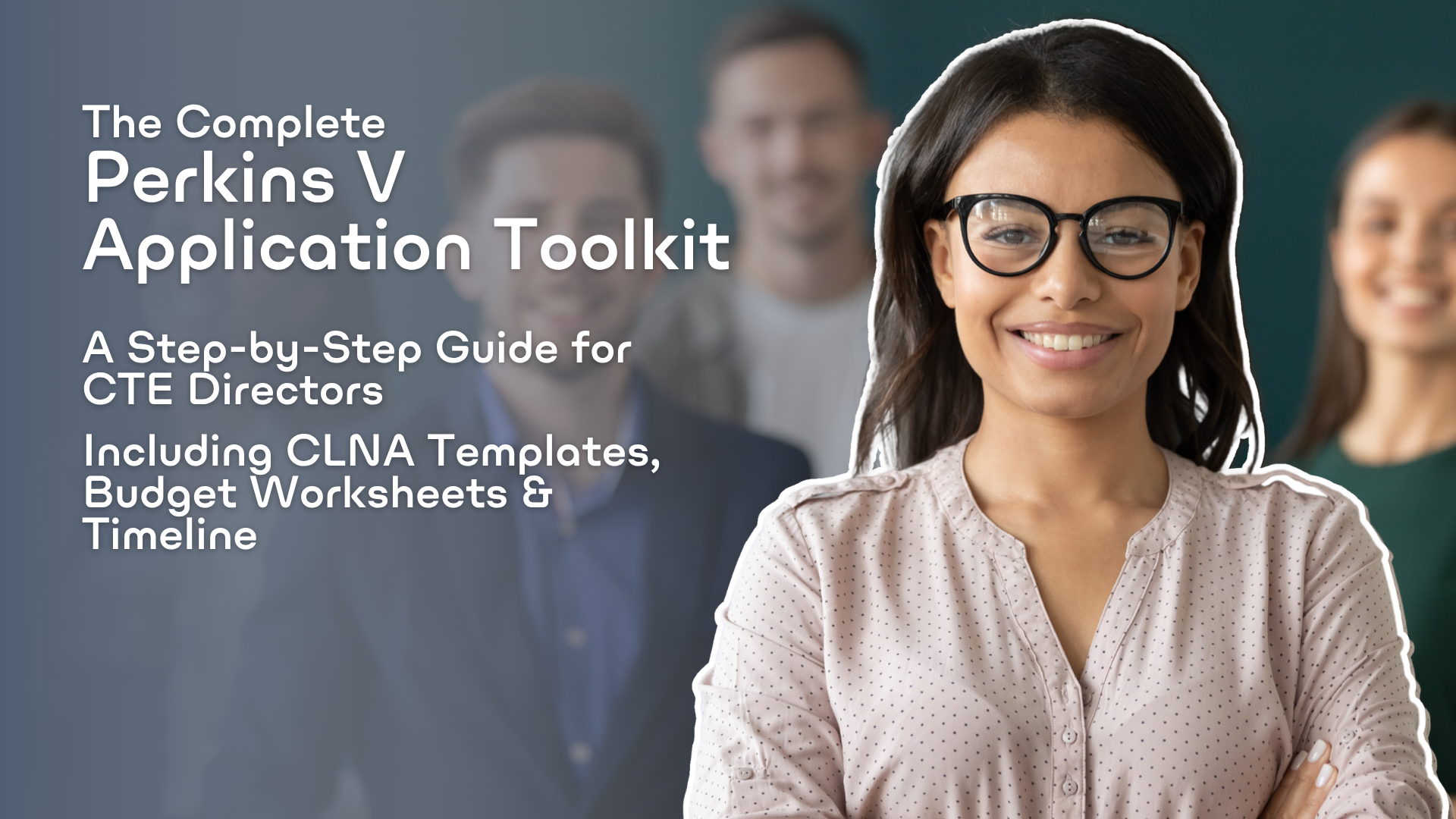
One of the most important shifts of the past decade in CTE policy is the requirement, embedded in Perkins V, that local applications and Comprehensive Local Needs Assessments (CLNAs) document genuine career development activities, not just course completions. Districts are expected to show that programs of study connect to labor market demand, that work-based learning is available and tracked, and that students, especially those from special populations, have equitable access to career preparation experiences.
For CTE directors preparing their Perkins applications, the question of which tools they are using to support undecided students and to document the career development activities of CTE concentrators is increasingly central to the compliance narrative. A platform that generates reports on student pathway selection, course plan completion, and WBL participation — the kind of coordination the WBL Management System Playbook lays out for JobreadyWBL and JobreadyCTE users — turns compliance documentation from a retroactive reporting exercise into a real-time byproduct of the work already happening.
This is the integration that districts are increasingly looking for: a CRD platform that handles the career development experience and a course planning tool that connects that experience to academic decisions, while producing the compliance documentation that state and federal accountability systems require. That combination does not require multiple systems, multiple logins, or multiple training cycles. When it is built into a single, connected experience, it becomes sustainable.
This back-to-school season is different
Twenty years ago, the start of a new school year meant scheduling undecided students into general electives and hoping something sparked their interest before junior year. Ten years ago, it meant pulling up a digital interest inventory and printing a report. Today, it means launching a connected experience that moves a student from "I don't know what I want to do" to a career-aligned graduation plan, with the counselor gaining real-time visibility into every step of that journey.
That is not a minor incremental improvement. It is a categorical shift in what school counselors can offer the students who need the most support, without requiring those counselors to work impossible hours or manage disconnected tools.
As districts finalize their back-to-school implementation plans this year, the question worth asking is not whether to adopt technology in support of undecided students. That ship has sailed, and the research on why it matters is unambiguous. The question is whether the tools in place connect career exploration to academic planning in a way that is scalable, equitable, and built to produce the documentation that accountability systems now require.
Whether your students arrive in the fall knowing exactly where they are headed or shrugging at the schedule form, every student deserves a system that helps them find their path.
Frequently asked questions
How do career readiness platforms help undecided high school students choose a path?
Career Readiness and Development (CRD) platforms guide undecided students through a progressive sequence of self-assessment, career exploration, and real-world exposure, rather than relying on a single interest inventory. Tools like virtual job shadowing, informational interviews, and industry-led projects let students test out career directions before committing, while connected course planning tools translate that exploration into a concrete academic plan.
What is the difference between a CCR platform and a CRD platform?
A College and Career Readiness (CCR) platform focuses on administrative functions such as college application management, graduation requirement tracking, and compliance reporting. A Career Readiness and Development (CRD) platform like Pathful goes further, delivering immersive career exploration, employer connections, and work-based learning that actively builds a student's career identity over time rather than simply tracking their progress toward a checklist.
Why is course planning important for undecided students?
Course planning matters because it is the bridge between career exploration and action. Without that bridge, a student can complete a meaningful career exploration activity and then make scheduling decisions that have no connection to it. When course planning tools are linked to career pathway selection, as with Pathful's Course Planner, a student's academic choices automatically reflect the direction they are exploring.
What features does Pathful's Course Planner offer for back-to-school season?
Pathful's Course Planner includes a guided student welcome walkthrough for fast onboarding, pathway-driven course requirements that populate automatically when a student selects a career interest, an at-a-glance educator dashboard for counselors, and flexible reporting that supports state compliance documentation such as ICAPs and 4-6 year plans of study.
How does career exploration technology support equity for first-generation and rural students?
Students without family professional networks or local industry access have historically had far less exposure to real career information. Virtual work-based learning, informational interviews, and industry-led projects delivered through a CRD platform give every student, regardless of zip code or family background, access to the same caliber of career exposure.
How does course planning support Perkins V compliance for CTE directors?
Perkins V requires districts to document genuine career development activity, not just course completion, as part of the Comprehensive Local Needs Assessment and annual local application. A connected course planning and CRD platform generates real-time reports on pathway selection, plan completion, and work-based learning participation, turning compliance documentation into a byproduct of work already happening rather than a separate reporting task.
Sources
- Hagedorn, R. and Fuchs, A. Why Career Readiness and Development Matters: Closing the Gap Between Graduate Preparation and Employer Expectations. Pathful, Inc., October 2025.
- Pathful. The Complete Perkins V Application Toolkit: A Step-by-Step Guide for CTE Directors. Pathful, 2025.
- Jobready360 by Pathful. The WBL Management System Playbook, v1.0.9. September 2025.
- American School Counselor Association. Student-to-School Counselor Ratio 2022-2023. ASCA, 2024.
- National Association of Colleges and Employers. Job Outlook 2023. NACE, 2022.
- Strada Education Network. Understanding Undergraduates' Career Preparation Experiences. December 2021.
- U.S. Bureau of Labor Statistics. Job Openings and Labor Turnover Summary. September 2025.
- Education Technology Insights Magazine. Career Readiness Platform of the Year 2025: Pathful. ETI, 2025.
- Pathful. New CTE Pathway Launch Playbook: A 12-Month Implementation Guide. Pathful, 2026.
- XQ Super School. High School and the Future of Work. XQ Reports.
- Riipen. Student Success with Access to Workplace-Ready Skills and Employment. June 2023.
Keep reading.
Back to school with confidence: how Pathful users can maximize first-month impact
Five research-backed ways Pathful users can activate Career Plans, WBL pipelines, and Course Planner data in the first 30 days of school.
The complete Perkins V application toolkit
A step-by-step guide for CTE directors — CLNA templates for all five required elements, a budget worksheet, and the mistakes to avoid.
From Iowa Tests to interest inventories
The history of career assessment, and what it means for students today.
Ready to make career readiness more meaningful?
Let's talk about how Pathful can support your students and meet your goals.